
Prestige cosmetics are premium beauty products distinguished by higher concentrations of active ingredients, superior formulations, and extensive research and development compared to mass-market alternatives. While drugstore foundations might offer decent coverage, prestige formulas typically deliver longer wear, more sophisticated textures, and broader shade selections, though whether that justifies price points two to five times higher depends entirely on your specific beauty goals and budget.
The prestige beauty market is experiencing remarkable momentum. Canada’s prestige beauty sector alone generated CAD 2.2 billion in sales during the first half of 2026, marking a 6% year-over-year increase that signals growing consumer confidence in premium products. What’s particularly striking is where shoppers are directing their dollars: hair care has emerged as the category’s powerhouse, posting 23% growth compared to the same period in 2025. Hair serums led the charge with an impressive 91% sales surge, while daily rinse shampoos and conditioners climbed 22% and 20% respectively.
This shift toward premium hair care reflects a broader cultural movement. With 83% of Canadians now prioritizing self-care, beauty purchasing decisions have evolved beyond simple vanity into intentional wellness investments. Women are asking smarter questions: Does this serum actually penetrate the hair shaft? Will this foundation photograph well under different lighting? Can this night cream deliver visible results within weeks rather than months?
Understanding what separates genuinely effective prestige products from overpriced packaging requires looking beyond marketing claims to examine ingredient quality, clinical testing, and real-world performance. The following guide breaks down exactly what you’re paying for and how to evaluate whether prestige cosmetics deserve a place in your routine.
What Actually Makes a Cosmetic Product ‘Prestige’
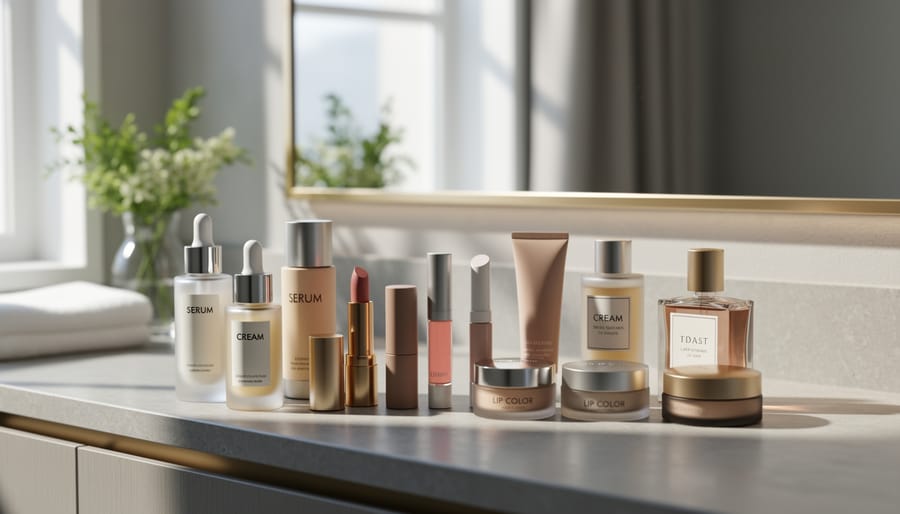
Prestige cosmetics aren’t defined by a single factor. They’re the result of several interconnected elements that create a different product experience from what you’ll find in drugstore aisles.
Formulation distinguishes prestige products most clearly. These cosmetics typically contain higher concentrations of active ingredients and use more refined bases that absorb better and feel lighter on skin. The difference shows up in texture, prestige foundations blend more seamlessly, serums penetrate without leaving residue, and lipsticks glide rather than drag. This isn’t magic; it’s chemistry and the willingness to use costlier ingredients.
Ingredient sourcing matters too. Prestige brands often invest in patented compounds, botanical extracts from specific regions, or ingredients that require complex extraction processes. You’re paying for research and development as much as the finished product.
Packaging in the prestige category serves function alongside form. Airless pumps preserve ingredient stability. Opaque containers protect light-sensitive formulas. The weight and design aren’t just about looking luxurious on your vanity, though that’s part of it, they’re about maintaining product efficacy.
The retail experience creates another distinction. Prestige cosmetics sell through beauty specialty stores and department store counters where trained staff can guide shade matching and explain how products work together. You’re buying expertise and return policies alongside the product itself.
Price positioning is the most obvious marker. Prestige products typically start where mass-market options end, reflecting those formulation choices, packaging investments, and retail relationships. But price alone doesn’t make a product prestige, the entire ecosystem has to align.
Mass-market cosmetics prioritize accessibility and value. Prestige cosmetics prioritize performance and experience. Both serve legitimate purposes depending on what you need from your beauty routine.
The Prestige Beauty Market Is Booming, Here’s What the Data Shows
The numbers from Canada’s prestige beauty sector tell a story that might surprise you. In the first half of 2026 alone, the market generated CAD 2.2 billion in sales, marking a solid 6% increase over the same period in 2025. That’s not just growth, it’s evidence of a fundamental shift in how women are choosing to spend their beauty dollars.
What’s driving this expansion? The data points to something unexpected: hair care is leading the charge. While skincare often dominates conversations about prestige beauty, hair products posted the strongest growth across the board, with overall hair sales jumping 23% compared to the first half of 2025.
| Product Category | Growth Rate | What This Means |
|---|---|---|
| Hair Serums | 91% | Consumers treating hair health as seriously as skincare |
| Daily Rinse Shampoo | 22% | Investment in foundational hair care basics |
| Daily Rinse Conditioner | 20% | Complete routine approach gaining traction |
The hair serum surge, a staggering 91% increase, is particularly revealing. Women are no longer viewing hair care as a basic hygiene routine but as a targeted treatment category worthy of the same investment they’d make in a premium face serum. Daily rinse shampoos and conditioners grew 22% and 20% respectively, showing that the prestige shift extends beyond trendy treatment products to the fundamentals.
This growth aligns with a broader cultural pattern: 83% of Canadians now consider self-care important. The prestige beauty boom isn’t happening in a vacuum. It reflects a deliberate choice to prioritize quality and performance in everyday routines, moving away from the accumulation of countless products toward thoughtful investment in fewer, more effective ones. When you’re spending more intentionally, you’re also researching more carefully and expecting real results.
Why Hair Care Is Leading the Prestige Revolution
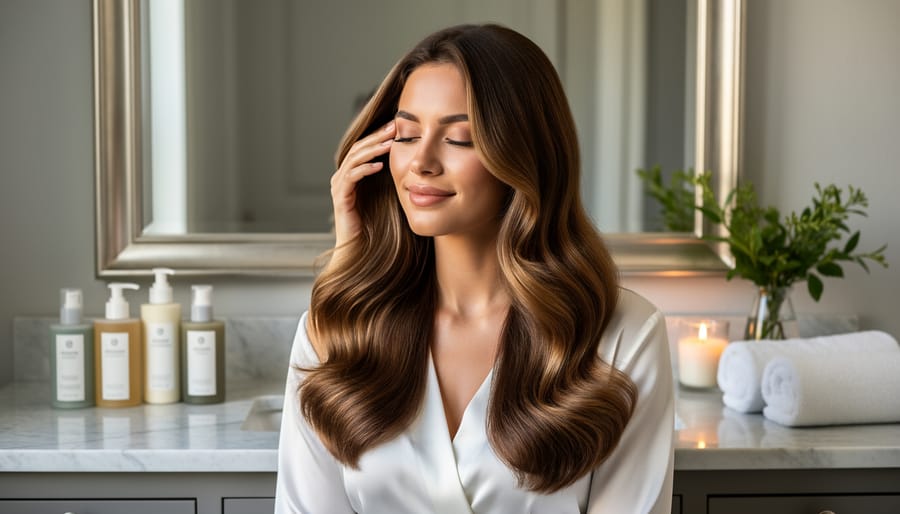
The 91% surge in hair serum sales tells a compelling story about how beauty priorities are shifting. Women aren’t just maintaining their hair anymore, they’re treating it with the same targeted, results-focused approach they’ve long applied to skincare.
This shift makes sense when you consider what prestige hair care actually delivers. Premium serums typically contain higher concentrations of active ingredients like bond-building proteins and heat protectants, formulated to address specific concerns rather than offering generic “shine and softness.” The texture matters too. Prestige formulations absorb without weighing hair down, a performance difference you notice every day.
The 22% increase in prestige daily rinse shampoo sales and 20% rise in conditioners reflects something beyond just trading up for luxury packaging. Women are recognizing that the products touching their hair most frequently deserve the same scrutiny as what touches their face. When a shampoo strips less color, preserves treatments better, or genuinely adds volume without buildup, the difference shows in every mirror check.
Of course, not everyone needs to buy prestige for every step. Many women balance premium targeted treatments with more affordable basics, or start with a DIY hair care routine before investing in specific products. The point isn’t spending more across the board, it’s identifying where performance gaps matter most to you.
This hair care revolution connects directly to the broader self-care trend driving the entire prestige beauty sector. Creating a hair spa at home ritual transforms routine maintenance into intentional self-investment, which is precisely what the market data reflects.
When Prestige Products Are Worth the Investment

Not every prestige product delivers dramatically better results than its mass-market counterpart, but certain categories consistently show differences you can see and feel.
Skincare actives deserve the prestige investment when concentration and stability matter to your goals. High-performance retinoids, vitamin C serums, and peptide treatments often contain more potent formulations in prestige lines, though you’ll need to read ingredient lists carefully rather than relying on price alone. The difference shows up in texture, absorption, and how your skin responds over consistent use.
Foundation and complexion products reveal their quality quickly. Prestige formulas typically offer better shade matching, more nuanced undertones, and textures that wear comfortably for hours without oxidizing or separating. If you struggle with finding your exact match or notice your makeup looking patchy by midday, this is where premium options often justify the cost.
Skincare for specific concerns, particularly treatments for hyperpigmentation, fine lines, or sensitivity, tends to show clearer differences between price points. Prestige products in these categories often incorporate newer delivery systems and undergo more rigorous stability testing.
Eye products deserve scrutiny rather than automatic upgrades. While some prestige mascaras perform beautifully, others disappoint compared to affordable alternatives. A mascara formula test can reveal whether premium pricing correlates with better performance for your lashes.
Hair care represents the fastest-growing prestige segment for good reason. Professional-grade treatments, damage-repair systems, and targeted serums often contain higher concentrations of active ingredients and show noticeable improvement in hair texture and health. The 91% surge in prestige hair serum sales reflects consumers recognizing this difference.
Fragrance and powder products fall into a grey zone. Personal preference drives these purchases more than measurable performance differences, though prestige options typically offer more complex scent profiles and finer milling.
How to Evaluate Whether a Prestige Product Is Right for You
Start by identifying the specific concern you’re trying to address. A targeted approach helps you evaluate whether premium pricing delivers meaningful results for your individual needs.
Understanding ingredient lists matters more than memorizing complicated names. Look at where active ingredients appear in the formulation, they’re listed by concentration, with higher amounts appearing first. For example, if you’re exploring treatments with novel ingredients like CBD, learning how CBD works in skincare helps you assess whether the product contains enough to be effective rather than just marketing appeal.
Performance claims should be verifiable through your own experience. Prestige brands often invest in clinical testing, but what matters is whether the product performs for your skin type and concerns. Pay attention to texture, how it feels during application and whether it absorbs well, since this affects whether you’ll actually use it consistently.
When comparing prestige and mass-market options, consider these evaluation steps:
- Identify your specific concern or goal (hydration, texture, coverage, longevity)
- Research which ingredients effectively address that concern and at what concentrations
- Test texture and wearability whenever possible through samples or testers
- Calculate cost-per-use based on how often you’ll reach for the product
- Assess whether the results justify the price difference for your priorities
Packaging deserves consideration beyond aesthetics. Airless pumps preserve active ingredients better than jar packaging, and opaque containers protect light-sensitive formulations. If a product contains ingredients that degrade with air or light exposure, premium packaging isn’t just luxury, it’s functional.
The most important question isn’t whether prestige products are inherently better, but whether they align with your beauty goals and budget. A foundation you wear daily might warrant investment if it performs noticeably better, while a seasonal lip color might not. Trust your own assessment of performance rather than price alone.
The Self-Care Connection: Why Women Are Choosing Quality Over Quantity
The 83% of Canadians who consider self-care important aren’t just answering a survey question. They’re fundamentally changing how they approach beauty purchases, shifting from collecting dozens of mediocre products to investing in fewer, higher-quality items that genuinely enhance their daily routines.
This cultural shift explains why prestige beauty sales grew 6% year-over-year even as consumers became more selective overall. Women are recognizing that a streamlined routine built around products that actually perform creates less bathroom clutter, less decision fatigue, and more satisfying results. The quality-over-quantity approach means spending more per product but often spending less overall than constantly replacing disappointing purchases.
The psychological benefits extend beyond the products themselves. Choosing a well-formulated serum or a luxurious hair treatment transforms a mundane task into a intentional moment of care. When you genuinely enjoy the texture, scent, and results of what you’re using, your morning and evening routines become something you look forward to rather than rush through.
The practical advantages matter too. Higher-quality formulations typically require less product per application, last longer, and deliver more noticeable improvements. This means those higher price tags often translate to better value per use when you factor in performance and longevity. You’re not just buying a product, you’re investing in a better experience and measurable results that make the ritual worthwhile.
The numbers tell a clear story: prestige cosmetics aren’t just surviving, they’re thriving. With CAD 2.2 billion in Canadian sales in the first half of 2026 alone and 6% year-over-year growth, this market expansion reflects something deeper than clever marketing. It shows women making deliberate choices about what they put on their skin and hair, backed by the 83% of Canadians who consider self-care a priority.
The dramatic 91% surge in hair serum sales and strong double-digit growth across hair care categories reveal that consumers are investing where they see results. This isn’t about chasing luxury for its own sake. It’s about recognizing that quality formulations, thoughtful packaging, and products designed to deliver specific outcomes can genuinely elevate your beauty routine.
What matters most isn’t the price tag, it’s whether a product works for you. Use the evaluation frameworks we’ve covered: read ingredient lists, test textures when possible, and consider whether the benefits align with your personal goals. Some prestige products will transform your routine; others might not justify the cost for your needs.
Trust your judgment, invest where it counts for you, and remember that the best beauty choice is always the informed one.