
Better sleep starts with a predictable evening routine that signals your body to wind down, consistent wake and sleep times that align with your natural circadian rhythm, and a bedroom environment optimized for darkness, coolness, and quiet. For most women, these three foundational shifts can improve sleep quality within one to two weeks, though hormonal fluctuations during menstruation, pregnancy, or menopause may require additional adjustments.
You don’t need expensive gadgets or supplements to transform your nights. What you do need is a willingness to protect your sleep window the way you’d guard any other health priority. Research consistently shows that sleep hygiene, the collection of daily behaviors that support or sabotage rest, matters more than most women realize. A late-afternoon coffee, evening screen time, or irregular bedtime can each unravel your body’s ability to fall asleep quickly and stay asleep deeply.
The challenge isn’t knowing sleep is important. It’s carving out the space to make it happen when you’re balancing work deadlines, family needs, and the mental load that keeps many women awake long after the lights go out. That’s where targeted, evidence-based habits come in. Small, specific changes to your daytime light exposure, evening activities, and sleep environment can compound over time, giving you the restorative rest your body needs to manage stress, regulate hormones, and show up fully in your life.
This guide walks you through the exact steps to build sustainable sleep habits, from preparing your bedroom to crafting a personalized wind-down ritual that actually works.
What You’ll Need to Transform Your Sleep Routine
Building better sleep habits requires more than willpower. You need the right tools and a shift in how you approach your evenings. Think of this as assembling a toolkit for one of the most important aspects of your health.
Physical Essentials for Your Sleep Environment
Start with your bedroom itself. Quality bedding matters more than you might think, breathable cotton or linen sheets help regulate body temperature, which fluctuates throughout your menstrual cycle. During the luteal phase, when your body runs warmer, these materials prevent night sweats that fragment sleep.
Blackout curtains or a comfortable sleep mask block artificial light that suppresses melatonin production. Women’s circadian rhythms can be particularly sensitive to evening light exposure, making darkness crucial for hormonal balance. A programmable thermostat or fan keeps your room between 60-67°F, the optimal range for deep sleep and the temperature drop your body needs to initiate rest.
Tools and Resources You’ll Actually Use
- Bedroom environment: blackout curtains, comfortable pillows that support your sleeping position, breathable bedding, white noise machine or fan
- Sleep tracking: journal for noting patterns, optional fitness tracker or app to monitor sleep cycles and quality
- Relaxation aids: lavender essential oil or pillow spray, gentle reading light with warm tones, herbal tea (chamomile, valerian root)
- Schedule adjustments: designated wind-down start time, screen curfew reminder, morning alarm set for consistent wake time
Beyond these tangible items, consider the intangible resources. You need roughly 90 minutes each evening for your wind-down routine, which means setting boundaries around work emails, social commitments, and household tasks.
The Mindset Shift That Makes It Stick
Partner cooperation is essential if you share your space. Have an honest conversation about noise levels, bedroom temperature preferences, and respecting each other’s sleep schedules. If your partner goes to bed later, establish quiet hours.
Most importantly, commit to consistency over perfection. Your body thrives on routine, and women’s hormonal systems particularly benefit from predictable sleep-wake patterns. Missing a night won’t undo your progress, but showing up for yourself most evenings will transform your sleep quality and overall wellness.
Important Safety and Health Considerations
Building better sleep habits can transform your health, but some sleep problems require professional care, not just a better routine. If you’re experiencing persistent difficulties that don’t improve with consistent habit changes over three to four weeks, it’s time to talk with your doctor.
Chronic insomnia, difficulty falling or staying asleep at least three nights per week for more than three months, often has underlying causes that bedtime rituals alone can’t resolve. Similarly, if you wake up gasping for air, snore loudly, or your partner notices you stop breathing during sleep, these are hallmark signs of sleep apnea, a condition that requires medical diagnosis and treatment.
Women face unique sleep challenges tied to hormonal fluctuations. During perimenopause, night sweats and hormonal shifts can severely disrupt sleep patterns in ways that extend beyond routine adjustments. Postpartum insomnia lasting beyond the newborn phase may signal postpartum depression or thyroid issues. If you suspect your menstrual cycle, pregnancy, or life stage transition is affecting your sleep quality significantly, an evaluation with your ob-gyn or endocrinologist can identify whether hormone therapy or other interventions might help.
Pay attention to medication interactions too. Some prescriptions, including certain antidepressants, blood pressure medications, and corticosteroids, can interfere with sleep architecture. Never stop prescribed medication without consulting your doctor, but do mention new sleep problems at your next appointment.
Mental health and sleep form a two-way street. Anxiety and depression commonly manifest as sleep disturbances, and poor sleep worsens mental health symptoms. If you’re struggling with persistent low mood, racing thoughts at night, or heightened anxiety alongside sleep issues, a mental health professional can address the root cause rather than just the symptom.
Good habits support healthy sleep. They don’t diagnose or treat medical conditions.
Your Step-by-Step Sleep Habit Blueprint
Step 1: Set Your Sleep Window (3-4 Hours Before Bed)
Your sleep window isn’t just about when you climb into bed, it’s the three to four hours before that set the stage for quality rest. Pick a target bedtime that lets you get seven to nine hours of sleep, then work backward to map your evening.
Start by cutting caffeine by early afternoon. Studies show that consuming caffeine even six hours before bed disrupts sleep architecture, and women metabolizing caffeine more slowly during the luteal phase of their cycle face even longer interference. If you want to avoid caffeine before bed set a 2 PM cutoff as your baseline, adjusting earlier if you’re sensitive.
Three hours out, shift to lighter eating. A heavy dinner diverts blood flow to digestion when your body should be cooling down for sleep. A balanced meal with protein and complex carbs works better than skipping food entirely, low blood sugar can wake you at 3 AM.
Around this same window, dim overhead lights and lower your activity intensity. Your body reads these cues as sunset signals, triggering melatonin production. For women tracking cycles, this consistency matters even more: irregular sleep-wake times can amplify PMS symptoms and disrupt ovulation patterns.
The key is repetition. Your circadian rhythm entrains to consistent timing, so pick a schedule you can maintain on weekends too.
Step 2: Create Your Environment (2 Hours Before)

Two hours before bed is the time to transform your bedroom into a sleep sanctuary. Start with temperature: aim for the optimal bedroom temperature between 60 and 67 degrees Fahrenheit. Women’s core body temperature drops before sleep and fluctuates throughout the menstrual cycle, so you might need slightly cooler settings during the luteal phase when progesterone naturally raises body heat.
Next, tackle lighting. Switch overhead lights for dim lamps or salt lamps that emit warm tones. Close curtains or blinds to create visual separation from the outside world. If streetlights intrude, blackout curtains or an eye mask can help.
Clear visible clutter from surfaces. Piles of laundry, work papers, or scattered items create mental noise that interferes with relaxation. Your eyes should land on calm, intentional spaces.
Finally, engage your senses positively. Fresh sheets signal sleep time to your brain. A few drops of lavender oil on your pillow or a quiet sound machine can anchor your wind-down routine, making it easier to repeat successfully night after night.
Step 3: Digital Sunset and Blue Light Management (90 Minutes Before)

Ninety minutes before your target sleep time, begin your digital sunset. Screens emit wavelengths that trick your brain into thinking it’s still daytime, blue light suppresses melatonin production for hours after exposure. Women may experience heightened sensitivity to this disruption during luteal phases when progesterone naturally promotes drowsiness, making the contrast between hormonal sleep signals and artificial alertness more jarring.
Start by setting device boundaries: no work emails, no scrolling social feeds, no binge-watching. If you must use a screen, enable night mode or install blue light filters, though these are damage control, not solutions. Better yet, charge phones outside the bedroom entirely.
Replace screen time with analog alternatives. Swap scrolling for reading a physical book, watching shows for listening to podcasts or music, texting friends for writing in a journal. Your hands need something to do during this transition, many women find tactile activities like knitting, coloring, or organizing tomorrow’s outfit satisfy the fidget urge without the dopamine spike screens deliver. The goal is gentle engagement that doesn’t activate your stress response or delay your body’s natural melatonin surge.
Step 4: Your Personal Wind-Down Ritual (60 Minutes Before)

With an hour to go before sleep, shift into activities that signal your body it’s time to rest. This transition period is crucial for lowering cortisol levels, which tend to spike in women during periods of chronic stress and can disrupt the delicate balance of estrogen and progesterone needed for quality sleep.
Start with your nighttime skincare routine, but approach it as a mindfulness practice rather than a task. The repetitive motions of cleansing, applying serums, and moisturizing activate your parasympathetic nervous system. Gentle upward strokes during application also improve lymphatic drainage and reduce facial tension you’ve held all day.
Follow with five to ten minutes of gentle stretching. Focus on hip openers and forward folds, which release stored tension in areas where women often carry stress. Cat-cow stretches and legs-up-the-wall pose are particularly effective for easing menstrual discomfort and promoting circulation.
Spend the remaining time with a physical book or journal. Writing down three things from your day or tomorrow’s priorities helps close mental loops that might otherwise keep you awake. Reading fiction engages your imagination without the problem-solving activation that work-related material triggers. Keep lighting warm and dim throughout.
Step 5: Relaxation Techniques (30 Minutes Before)
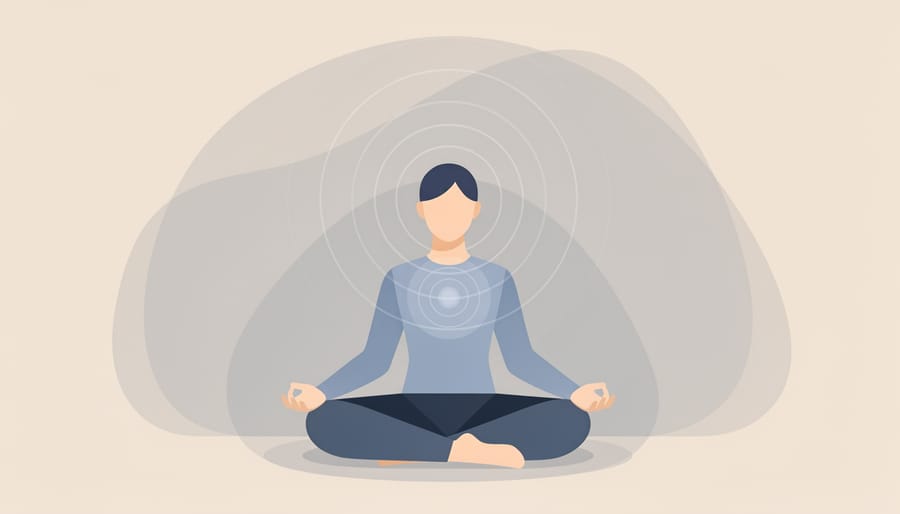
Thirty minutes before bed, shift into active relaxation to signal your nervous system it’s safe to power down. Start with 4-7-8 breathing: inhale through your nose for four counts, hold for seven, exhale through your mouth for eight. This extended exhale activates your parasympathetic response, countering the cortisol spikes many women experience from juggling work, family, and personal demands.
Try progressive muscle relaxation next. Lie down and systematically tense then release each muscle group, starting with your toes and moving upward. Pay special attention to your jaw, shoulders, and hips where women tend to store tension. Hold each contraction for five seconds, then release completely.
For movement-based calm, gentle poses like legs-up-the-wall or child’s pose help. These inversions and forward folds reduce heart rate and ease menstrual discomfort or perimenopause-related restlessness.
A simple body scan meditation works too: mentally sweep from head to toe, noticing sensations without judgment. This mindfulness practice helps women who ruminate at night break the worry cycle.
Step 6: The Final 15 Minutes
The final 15 minutes before sleep should happen entirely in your bedroom, with everything else left behind. This boundary signals to your brain that bed equals sleep, not work, scrolling, or problem-solving.
Check your room temperature one last time, between 65-68°F is ideal for most women, though you might prefer slightly warmer during certain cycle phases. Use only dim, warm lighting: a small bedside lamp or even just bathroom light spilling through a cracked door. Complete darkness comes when you’re actually ready to close your eyes.
Settle into your preferred sleep position. Side-sleeping with a pillow between your knees often works well for women, supporting spinal alignment and reducing pressure on hips. If you take magnesium glycinate or other sleep-supporting supplements, this is the time, about 20-30 minutes before lights-out so they can begin working.
The consistency matters more than perfection. Your body learns to anticipate sleep when you hit the pillow at roughly the same time each night, which strengthens natural melatonin release and helps regulate hormones like cortisol and estrogen that depend on predictable sleep-wake cycles.
How to Know Your New Habits Are Working
Changes in your sleep quality rarely happen overnight, your body needs time to adjust to new routines and reset its internal rhythms. Give your new habits at least two weeks before evaluating their impact, though some improvements may show up sooner than others.
Start by tuning into how you feel each morning. Do you wake up naturally before your alarm? Are you springing out of bed with energy instead of hitting snooze three times? These subjective markers often shift first. Notice your mood stability throughout the day, better sleep typically means fewer energy crashes and less irritability, especially during the premenstrual phase when emotional regulation can be more challenging.
Your skin tells a story about sleep quality too. Within three to four weeks of consistent better sleep, you should notice a more even complexion, reduced under-eye circles, and faster healing of blemishes. The body does most of its cellular repair during deep sleep stages, so improved skin quality confirms you’re spending enough time in those restorative phases.
For women tracking menstrual cycles, watch for increased regularity over two to three months. Better sleep supports hormonal balance, which often translates to more predictable cycle lengths and reduced PMS symptoms. If you’re using a period tracking app, compare your cycle patterns before and after implementing your routine.
Objective measures add valuable context. Sleep tracking devices or apps can show you’re spending more time in deep and REM sleep, with fewer nighttime awakenings. Your resting heart rate, measured first thing in the morning, should gradually decrease over four to six weeks as your nervous system learns to downregulate more effectively. A drop of even three to five beats per minute signals improved cardiovascular recovery.
If you’re not seeing improvements after a month, don’t abandon the routine entirely. Instead, adjust one element at a time. Maybe your bedroom is still too warm, or you need to push your digital sunset earlier. Sometimes the issue isn’t the habits themselves but their timing, shifting your entire routine 30 minutes earlier or later can make all the difference for your personal chronotype.
Expert Insights on Sleep and Women’s Wellness
Dr. Maya Chen, a board-certified sleep medicine physician at the Women’s Health Sleep Center in Portland, emphasizes that sleep isn’t just rest, it’s active restoration. “During deep sleep, your body regulates estrogen and progesterone production. When we skip consistent bedtime routines, we’re directly interfering with hormonal communication that affects everything from fertility to bone density.” She notes that 2026 research from the National Sleep Foundation reveals women who maintain regular evening rituals experience 34% better hormonal balance markers compared to those with irregular schedules.
One persistent misconception? That you need eight hours to be healthy. “The magic number varies by life stage,” explains Dr. Lila Thompson, an ob-gyn specializing in reproductive endocrinology. “Perimenopausal women often need slightly more sleep due to hormonal fluctuations, while menstruating women may find their needs shift throughout their cycle. Quality and consistency matter more than hitting an arbitrary number.”
Wellness coach Sarah Martinez works with hundreds of women building sleep habits. She sees clients abandon routines because they expect overnight transformation. “Your body needs three to four weeks to recognize and respond to new patterns. Women in their thirties might see improvements faster than those navigating menopause, but everyone needs patience.” She recommends tracking not just sleep duration but morning clarity, afternoon energy crashes, and skin changes as better indicators of progress.
The biggest 2026 finding that surprised experts? Evening routine consistency impacts immune function more significantly in women than men, with regular bedtime rituals reducing inflammatory markers by up to 27% in female participants. This connection between simple habits and measurable health outcomes reinforces why your nighttime routine deserves serious attention.
Common Questions About Building Better Sleep Habits
How long before I notice improvements in my sleep quality?
Most women see initial improvements within one to two weeks of consistent practice, with deeper benefits emerging after four to six weeks as your body adjusts to the new rhythm. Hormonal regulation and circadian alignment take time, so patience matters more than perfection.
What if my partner has completely different sleep needs or habits?
Communication and compromise are key. Use separate blankets for temperature preferences, consider a sleep mask and earplugs if schedules differ, and establish quiet hours that work for both of you. Your sleep routine can coexist with different habits when you create personal boundaries.
How do I adapt my routine during different phases of my menstrual cycle?
During the luteal phase and menstruation, you may need earlier bedtimes and cooler temperatures as body temperature naturally rises. The follicular phase often allows for more flexibility, while ovulation may boost energy temporarily. Listen to your body and adjust timing by 30 to 60 minutes as needed.
Can I still build good sleep habits if I work shifts or irregular hours?
Absolutely, though it requires more deliberate structure. Keep your wind-down routine consistent regardless of clock time, use blackout curtains and white noise for daytime sleep, and maintain the same sequence of steps even when your sleep window shifts. Consistency in the routine matters more than the specific hour.
What should I do when my sleep gets disrupted despite following my routine?
Life happens, and occasional disruptions are normal. Return to your routine the next night without guilt or overcompensation. If disruptions persist for more than two weeks, reassess your environment, stress levels, and whether underlying health issues need professional attention.
How do sleep needs change during pregnancy and postpartum?
Pregnancy often increases sleep needs while making comfortable positions harder to find. Prioritize earlier bedtimes, use pillows for support, and embrace daytime naps when possible. Postpartum sleep will be fragmented, so focus on sleep hygiene during available windows rather than perfect routines, and accept help from your support network.
Beyond these common scenarios, remember that your sleep routine should serve you, not become another source of stress. If a step feels forced or counterproductive, modify it. Some women thrive with a structured 90-minute wind-down, while others need just 30 minutes of intentional transition. The goal is sustainable habits that fit your life, not a rigid protocol that adds pressure.
When troubleshooting persistent issues, track patterns for at least a week. Note which nights you sleep well and what preceded them. Often, the answer lies in subtle factors like afternoon caffeine timing, unresolved stress from the day, or room temperature fluctuations you hadn’t noticed. Small adjustments can yield significant improvements when you identify the right variable to change.
Building better sleep habits isn’t about executing a flawless routine every single night. It’s about making consistent choices that support your body’s natural rhythms and your overall wellbeing as a woman. Some evenings will flow smoothly through each step, while others might involve compromises, shortened routines, or starting over the next day. That’s not failure, that’s real life.
Start with the steps that resonate most strongly with you right now. Maybe it’s establishing a firm digital sunset, or perhaps creating a calming skincare ritual feels most achievable. Small, sustainable changes compound over time, reshaping your relationship with sleep more effectively than attempting an overnight transformation that feels overwhelming.
Remember that your sleep needs will shift across your cycle, through different life stages, and during periods of stress or change. The habits you’re building now create a flexible foundation you can adjust rather than abandon when circumstances evolve. Your body deserves this investment, and the returns, steadier energy, clearer thinking, better mood regulation, healthier skin, will reinforce your commitment.
We’d love to hear which steps you’re implementing first and what differences you notice. Share your experiences in the comments below, ask questions when challenges arise, and celebrate the small wins with our community. Your journey toward better sleep matters, and you don’t have to navigate it alone. Sweet dreams start with choices you make while you’re still awake.