
Platinum skincare is a category of products that feature platinum, in colloidal or infused form, as a marquee ingredient. It’s promoted for brightening, smoothing, and antioxidant support. The honest verdict? The shiny metal gets the headlines, but the results people notice usually come from what sits beside it: peptides, humectants, and well-formulated textures that keep skin comfortable and hydrated. Platinum itself has limited published research behind it for skin, so a measured, evidence-aware approach is your best friend here.
That doesn’t mean the category is empty hype. Some platinum products are lovely to use, and a few are worth a spot in your routine if you know what to look for. Below, you’ll find seven picks, from sheet masks and peptide serums to night creams, eye treatments, facial tools, spa services, and a budget-friendly platinum-style routine built on everyday staples. We’ll show you exactly how we chose them, so you can shop with confidence instead of guesswork.
Have you tried a platinum product that surprised you, for better or worse? We’d love to hear about it in the comments as we go.
What Platinum Skincare Really Is (and What the Science Says So Far)
If you’ve ever wondered why a jar of face cream suddenly costs more because it says “platinum,” you’re not alone. The word shows up in three main ways, and it helps to know which one you’re looking at.
First, there’s colloidal platinum. “Colloidal” simply means tiny metal particles suspended in a liquid. Brands add it to masks and creams because platinum is rare and prized, and marketing often links it to antioxidant and soothing effects.
Second, there are platinum peptides. Peptides are short chains of amino acids, the building blocks of protein, and they’re a well-studied family of skincare ingredients. Some products pair them with platinum to give a familiar active a luxurious twist.
Third, and most common, “platinum” is a positioning term. It signals a premium experience, not a proven ingredient. Think of it like a first-class ticket: nice, but not always what gets you there faster.
So what does the science say? Honestly, research on platinum’s direct benefits for skin is limited. Much of the buzz comes from small lab findings and brand claims rather than large human studies. That doesn’t mean your favorite product isn’t doing something wonderful. Often the visible glow comes from supporting ingredients like hyaluronic acid for hydration, antioxidants for protection, and peptides for smoother-looking skin.
If you’re curious about how simple, well-chosen formulas work, our guide to natural skincare basics is a friendly place to start before you shop.
How We Chose These Platinum Skincare Picks
Choosing platinum skincare picks is tricky, because the word “platinum” often does more work on the box than in the bottle. So instead of crowning winners, I built this list around product types and what to look for on the label. No rankings, no unverified miracle claims, just a practical way to shop with confidence.
Here’s the checklist I used for every pick:
- Ingredient transparency: a full, readable ingredient list, not just a glossy “platinum complex.”
- Skin-type fit: options that work for dry, oily, sensitive, and mature skin at different ages.
- Evidence-backed supporting ingredients, such as hyaluronic acid, peptides, niacinamide, and vitamin C.
- Patch-test friendliness: gentle formulas, with fragrance-free choices flagged where it matters.
- Value for money: a fair price for what’s actually inside.
- Ease of use: simple steps that fit a real morning or evening routine.
I also leaned on expert input, which you’ll find in the dermatologist section below. Why this approach? Because the research on platinum itself is still limited, while the benefits of the supporting ingredients are far better understood. Think of platinum as the shiny extra, and the proven basics as the foundation. That way, whatever you choose, you’re backed by more than a luxury label.
7 Platinum Skincare Picks to Consider
1. Platinum-Infused Sheet Masks for a Hydration Boost
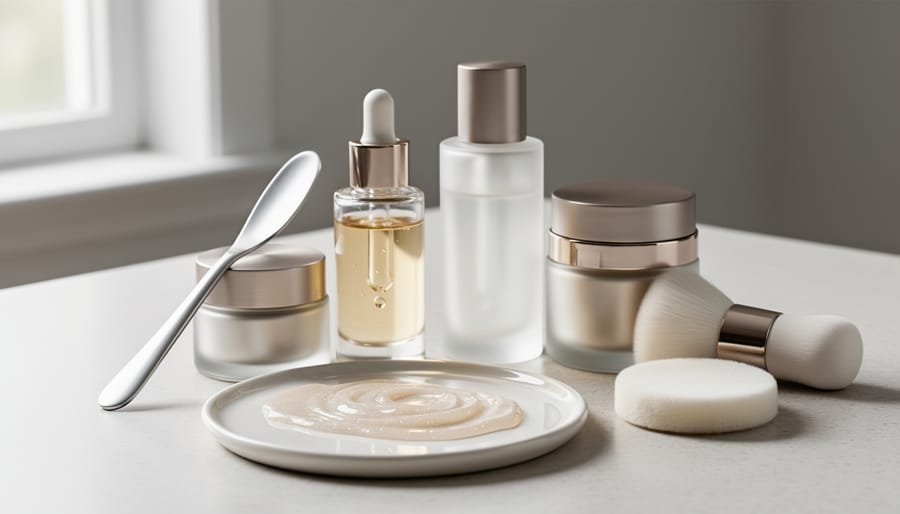
If your skin feels tight, dull, or a little tired, a sheet mask is one of the easiest places to try platinum skincare. These masks suit most skin types, especially dry, dehydrated, or travel-weary complexions that want a quick pick-me-up before an event.
Flip the packet over and read past the platinum claim. The heavy lifting usually comes from hydrators like hyaluronic acid and glycerin, plus soothing extras such as panthenol or aloe. If your skin is sensitive, look for a short, fragrance-free ingredient list.
Most people do well using one to two times a week. Apply to clean skin, leave it on for the time listed on the packet, then gently pat in the leftover essence rather than rinsing it off.
Keep your expectations realistic. The payoff is a temporary plumped, dewy look that can last a day or so, not a lasting change. Think of it as a lovely little self-care ritual.
2. Platinum Peptide Serums for Smoother-Looking Skin
Peptide serums are the quiet workhorses of a smoother-looking routine. Peptides are short chains of amino acids, and in a platinum-branded formula they’re usually paired with a trace of the metal for a luxe feel. The peptides themselves are doing most of the work.
Apply your serum right after cleansing, while skin is slightly damp. Use a few drops, press them in, then follow with moisturizer to lock everything down. Lightweight, water-based formulas layer best under a cream, so skip anything thick or tacky that could pill. Fragrance-free options are a safer bet if your skin runs sensitive.
Here’s the honest part: a fancy label won’t give you faster results. What matters is using the serum daily, since studies on peptides point to improvements over time rather than overnight. Give any new serum at least eight to twelve weeks before judging it.
3. Platinum Night Creams for Overnight Comfort
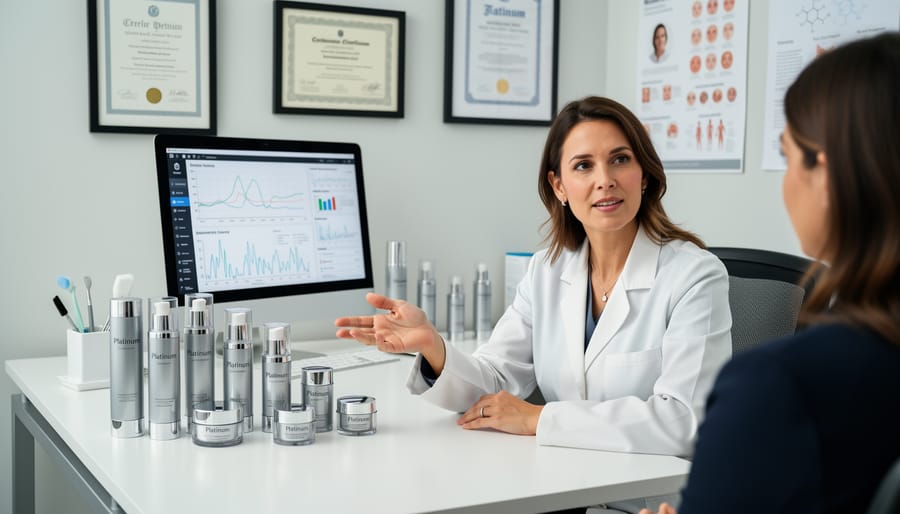
Night is when skin does its quiet repair work, and a rich cream can make that feel like a treat. Platinum night creams are usually positioned as luxury comfort products, best suited to dry or mature skin that wants extra cushioning. The “platinum” part is mostly about the experience, so let the supporting ingredients do the judging.
On the label, look for barrier helpers like ceramides, squalane, glycerin, and shea butter, plus peptides or niacinamide if you want smoother-looking skin. If your skin is sensitive, skip heavy fragrance and patch-test first.
Layering is simple, and since there’s no sunscreen at night, you can keep things light. Cleanse gently, add a hydrating serum if you like, then smooth on a pea-to-nickel-sized amount of cream. Treat it as one calming step in a healthy bedtime routine and save your SPF for the morning.
4. Platinum Eye Treatments for Delicate Skin
The skin around your eyes is thinner and more reactive than the rest of your face, so a platinum eye treatment should be judged on its gentleness first and its luxe label second. Look for fragrance-free formulas with soothing, hydrating ingredients like glycerin, hyaluronic acid, or peptides, and be cautious with products that list essential oils or added perfume high on the ingredient list.
Patch-test on your inner forearm for a few days before going near your eyes, especially if your skin runs sensitive. Then keep it simple: dab a rice-grain amount of product along the orbital bone using your ring finger, which naturally applies the lightest pressure. Skip the lash line and never rub or tug.
Used morning or night, a good eye treatment can leave the area looking more hydrated and refreshed. Think comfort and smoothness rather than dramatic change, and stop using it if you notice stinging or redness.
5. Platinum-Tipped or Platinum-Plated Facial Tools
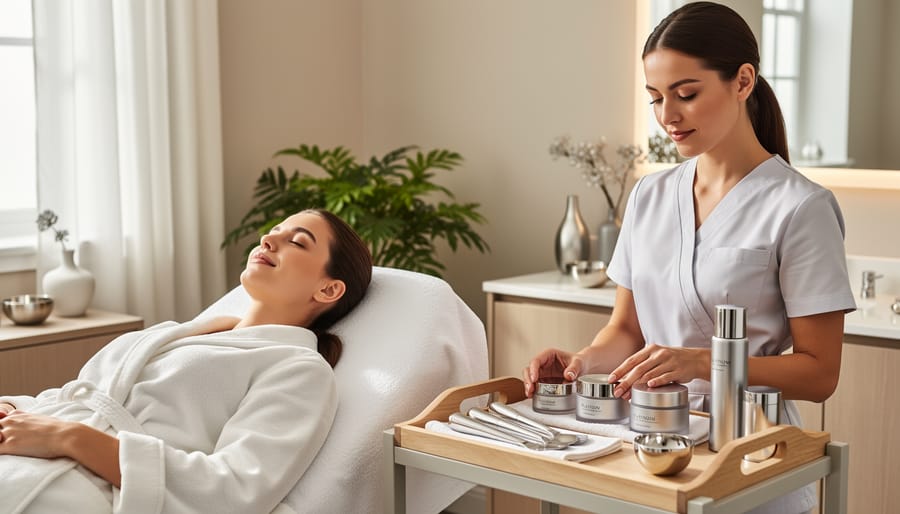
Platinum-tipped or platinum-plated facial tools, think rollers, gua sha stones, and massage wands, borrow the metal for its sleek, cool-to-the-touch finish. Here’s the honest part: the platinum plating is mostly about feel and looks. The real benefits come from the massage itself.
Used gently, these tools can feel wonderfully relaxing and may help you spread serums and creams more evenly, which makes your routine feel more intentional. A little temporary puffiness relief is possible too, especially if you keep the tool in the fridge. Dramatic lifting or lasting anti-aging results aren’t supported, so keep expectations realistic.
Technique matters more than the metal. Apply a slip-giving serum or oil first, then glide upward and outward with light pressure. You shouldn’t tug or press hard.
Hygiene is the other must-do. Wipe your tool with mild soap and water after each use, dry it fully, and check the plating for chips or scratches, which can irritate skin or harbor bacteria.
6. Platinum Facial Treatments at the Spa
A professional platinum-themed facial usually starts with a cleanse and a quick skin check. Then comes the star of the menu: a platinum-infused mask or serum, often paired with gentle massage. Think of it as a hydrating, glow-boosting treat that doubles as some much-needed calming self-care, rather than a miracle fix.
Before you book, ask your esthetician a few simple questions. What’s actually in the platinum product, and what do the supporting ingredients do? Is it suitable for your skin type? How many sessions will you need, and what will the total cost be?
When weighing cost against results, keep expectations realistic. A single facial can leave skin looking plumper and brighter for a few days, but lasting changes come from your everyday routine. If the price feels steep, treat it as an occasional indulgence.
7. Platinum-Style Routines Using Everyday Evidence-Backed Staples
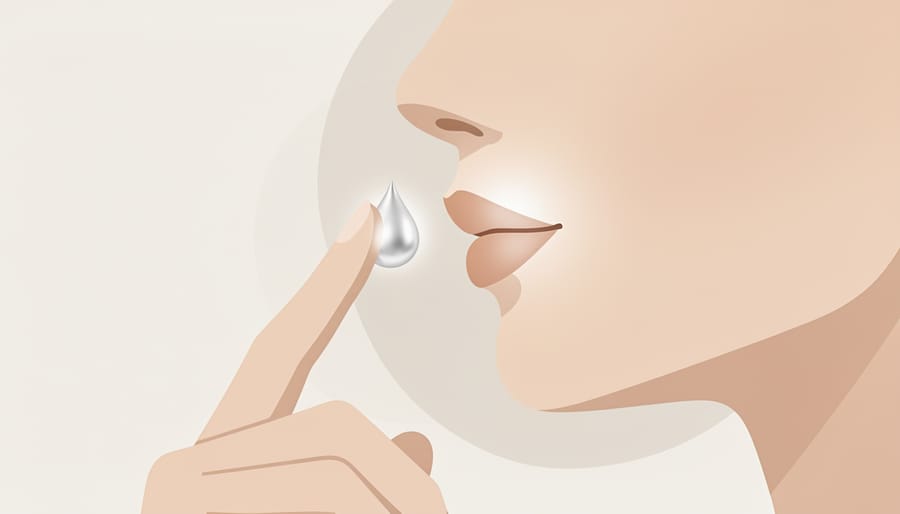
You don’t need a platinum label to get that luxe, put-together feeling. Some of the most effective skincare is also the simplest, and it’s easy to build a routine around a few proven basics:
Start with a gentle cleanser that leaves your skin comfortable rather than tight. In the morning, add vitamin C or niacinamide, two ingredients with solid research behind them for tone, brightness, and a stronger-looking barrier. Follow with a moisturizer suited to your skin type, then finish with a broad-spectrum SPF every single day. That last step does more for long-term skin health than any pricey extra.
At night, swap the vitamin C for your favorite treatment and skip the sunscreen. Once the basics feel steady, treat yourself to a platinum mask or serum if it makes you smile. Think of it as a little bonus, not the foundation. Patch-test anything new, and give each change a few weeks before judging the results.
What a Dermatologist Wants You to Know Before You Buy
I asked a board-certified dermatologist the questions our community asks most about premium-metal skincare. Her answers were refreshingly practical.
Does platinum itself matter?
“The evidence for platinum doing something special on skin is thin,” she explained. “That doesn’t make a product bad. Plenty of ‘platinum’ formulas contain genuinely useful ingredients like hyaluronic acid, peptides, and ceramides. Those are doing the heavy lifting.”
How should I read a label?
“Flip the box over. Look at the first five ingredients, because that’s where the bulk of the formula lives. If the platinum is near the end of the list, it’s likely a tiny amount. Then check for proven actives, such as niacinamide, vitamin C, or retinoids, and fragrance if your skin is sensitive.”
What marketing claims should make me pause?
“Be wary of words like ‘miracle,’ ‘permanent,’ or ‘erases wrinkles.’ Cosmetics improve how skin looks and feels, but they don’t rewrite biology. Vague phrases like ‘clinically inspired’ aren’t the same as real testing.”
Her closing advice? “Patch-test anything new, and never skip daily SPF. A beautiful serum can’t replace sunscreen.”
A good rule of thumb: let the ingredient list earn your trust, and treat the platinum as a pleasant extra rather than the main event.
Your Platinum Skincare Questions, Answered
Is platinum skincare safe for sensitive skin?
It depends on the whole formula, not the platinum. Look for fragrance-free options, and always patch test first, especially for eye treatments and masks.
Does it work better than regular skincare?
Research on platinum’s direct skin benefits is limited. Most visible results come from supporting ingredients like hydrators and peptides, so a simple, consistent routine can perform just as well.
Can I use it every day?
Serums and night creams are usually fine daily if your skin tolerates them. Sheet masks and spa facials are better as occasional treats.
How do I patch test?
Dab a small amount on your inner forearm or behind your ear for a few days. If you see no redness, itching, or irritation, you’re likely good to go.
Now it’s your turn. Have you tried a platinum mask, serum, or spa facial? Tell us in the comments what you loved, what you’d skip, and how you fit it into your routine. Your experience could help another My Oh My reader decide what’s worth it.
Glowing skin rarely comes from one fancy product. It comes from showing up for your routine, wearing sunscreen every day, and choosing ingredients your skin actually likes. If a platinum treat makes your evening feel special, whether that’s a sheet mask or a spa facial, enjoy it as a bonus rather than a must-have.
We’d love to hear from you! Join the My Oh My community conversation and share your favorite routines, platinum or not, so we can all learn from each other.