
Yes, professional skin treatments and an at-home acne routine work best as a team. Your daily products keep pores clearer and skin calmer from week to week, while in-office options like chemical peels, extractions, and light-based therapies target what home care can’t reach on its own. Getting started is simple: book a consultation, share what you already use, and your provider builds a plan around it. Expect to adjust your routine too, since some treatments mean pausing certain actives for a few days.
If you’ve been loyal to your cleanser, your retinoid, and your spot treatment and still see stubborn breakouts or lingering marks, that’s frustrating, and it’s incredibly common. It doesn’t mean you’re doing anything wrong. Acne has many layers, and sometimes the best results come from adding expert hands to your own good habits.
In this guide, we’ll break down what these treatments are, who they suit, how to prepare, how to tweak your home routine around them, and what you can expect from your provider. For a look at what a local skin studio offers, you can visit https://www.yegestheticsskinstudio.ca/ and see how a consultation-first approach works. Let’s get your skin and your routine pulling in the same direction.
What Professional Acne Treatments Are (and What Your Home Routine Still Does Best)
The Professional Options, Explained Simply
Professional acne care covers a handful of options, and each one has a different job. Here’s the short version, in everyday words.
| Treatment | What it generally targets | How often it’s typically discussed | How it pairs with home care |
|---|---|---|---|
| Chemical peels | Clogged pores, uneven tone, mild marks | Often in a series spaced weeks apart | Gentle cleanser and moisturizer; pause strong actives if advised |
| Professional extractions | Blackheads and whiteheads | Occasionally, as needed | Keep your routine simple and don’t pick afterward |
| Light or laser therapy | Bacteria, redness, oil, some marks | Usually a planned course of sessions | Daily sunscreen is essential |
| Microneedling | Textured skin and scarring | A few sessions, spaced out | Barrier-supporting moisturizer and gentle care |
| Prescription options | Persistent or deeper breakouts | Ongoing, with regular check-ins | Your provider tells you what to keep or drop |
Results and suitability vary from person to person, so treat this as a starting point for a conversation, not a menu to order from.
Peels are the “reset” option, loosening the buildup that keeps pores clogged. Extractions clear out stubborn blackheads safely, which is why they’re best left to trained hands. Light and laser therapies work on bacteria, redness and oil without a product to apply.
If scarring is your main worry, it’s worth knowing that microneedling targets acne scars in a way that peels often don’t. Your provider can tell you which route fits your skin.
What Your Daily Routine Still Does Best
Between appointments, your daily routine is the part that never takes a day off. Professional care can target stubborn spots, but the everyday steps keep your skin steady while treatments do their work.
Start with gentle cleansing, once in the morning and once at night. Harsh scrubbing or squeaky-clean formulas tend to strip the skin and trigger more oil and irritation. If one area feels especially greasy, a bit of extra attention helps, and our guide to oily nose care shows how to do that without overdoing it.
Next come targeted acne ingredients, such as salicylic acid, benzoyl peroxide or a gentle retinoid. They keep pores clearer day to day, so use them as directed and follow your provider’s guidance if you’re also having in-office treatments.
Moisturizer is not optional, even with oily or breakout-prone skin. A lightweight, non-greasy formula supports your skin barrier and softens the dryness many acne products cause.
Finally, wear sunscreen daily. It helps protect treated skin and keeps post-acne marks from lingering longer than they need to.
Consistency matters most here. Small, steady habits make each professional session work harder for you.
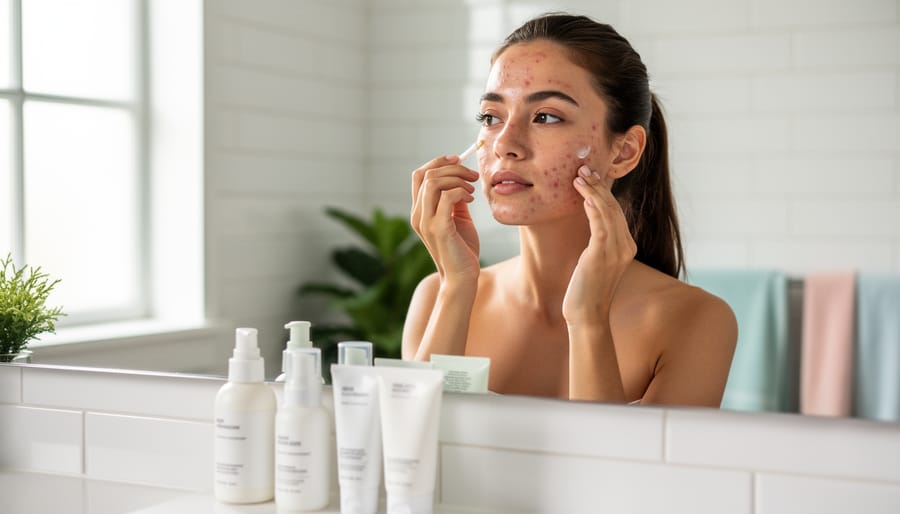
Who Professional Treatments May Suit: Eligibility and When to Consider Them

Not everyone needs a professional treatment, and that’s perfectly fine. A steady home routine is enough for plenty of people. But there are clear moments when an extra set of expert eyes makes a real difference.
If you’ve been consistent for six to eight weeks and your skin still isn’t budging, that’s a good cue. Here are some other signs it may be time to book a consultation:
- Your breakouts haven’t improved after several weeks of a steady routine.
- You’re getting deeper, painful bumps or cysts that linger under the skin.
- Dark marks or scars keep showing up after pimples heal.
- Acne is affecting your confidence, mood, or how you show up each day.
- You’re unsure which products are helping and which might be making things worse.
That last point about emotional distress deserves a moment. Skin worries are real, and wanting support isn’t vanity. It’s a perfectly good reason to ask for help.
Some situations call for a provider’s input before any treatment begins. If you’re pregnant or nursing, your options may be different, since some ingredients and procedures aren’t recommended. The same goes if you take certain medications, including some acne or hormonal prescriptions, because they can change how your skin reacts. Very sensitive skin, a recent sunburn or tan, or a diagnosed skin condition like eczema or rosacea are also worth mentioning upfront.
Here’s the key thing: who qualifies for what isn’t something you have to figure out alone. A licensed professional, such as a board-certified dermatologist or a qualified clinician, makes that call after looking at your skin and hearing your history.
And whatever your skin type or tone, you deserve a plan built around you. Some treatments are adjusted for deeper skin tones to lower the risk of dark marks, for instance. A good provider will talk through that with you, not hand you a one-size-fits-all approach.
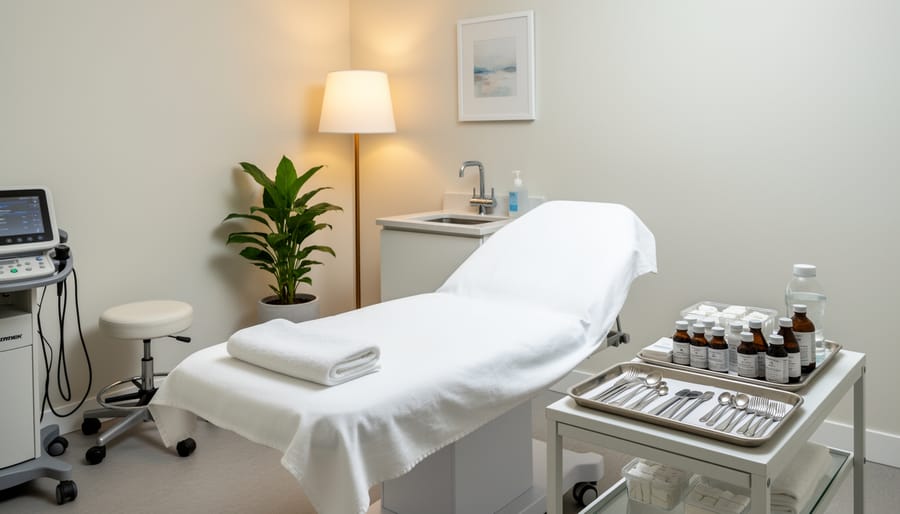
How to Get Started: Booking, Preparing and Completing a Professional Treatment Plan
Smart Questions to Bring to Your Consultation
A good consultation is a two-way conversation, so it helps to arrive with questions ready. Start with the provider themselves: What is your training and experience treating acne, and how often do you work with skin like mine? Ask which treatments they’d consider for you and why, plus what alternatives exist if you’d rather start gentler.
Next, get a clear picture of the timeline. How many sessions will I likely need, and how far apart? When might I notice changes, and what’s realistic? It’s also fair to ask about downtime: Will I be red or peeling, and for how long? Can I plan around work or events?
Don’t skip the practical side. Ask for a full cost estimate, including follow-ups and any products they recommend, and whether anything is covered by insurance.
Finally, ask how the plan will work with what you already use. Which of my current products should I keep, pause, or swap, and when should I restart them after a session? Jot down the answers so you can follow them closely at home.
Making Both Work Together: Adjusting Your At-Home Routine Around Treatments
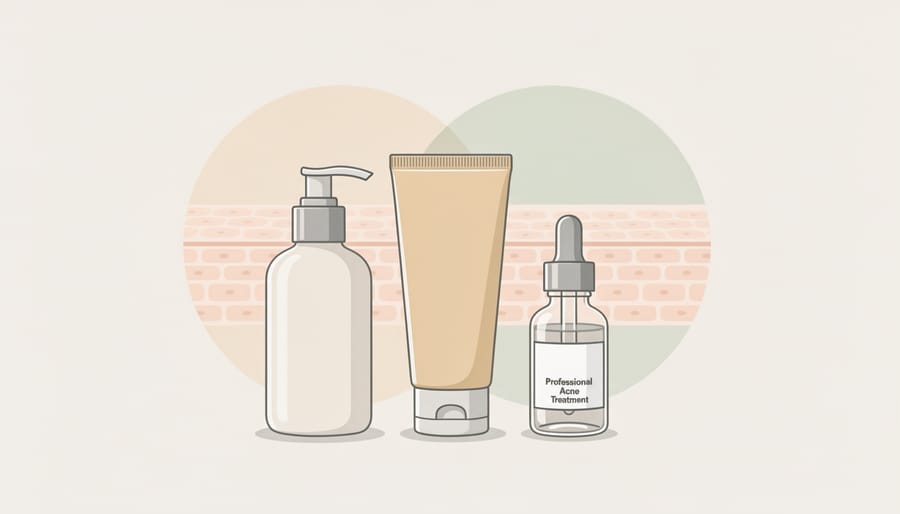
Think of your home routine as the steady backbone and your professional treatments as the occasional boost. When a treatment is on the calendar, the goal shifts from doing more to doing less, and doing it gently. Your provider will tell you exactly what to pause and when, so treat their instructions as the final word. Here’s the general rhythm most people follow.
| Phase | General home-care approach |
|---|---|
| Before treatment | Keep things simple. Your provider may ask you to pause strong actives like retinoids or exfoliating acids for a few days. |
| Right after | Stick to a mild cleanser, a soothing moisturizer and sunscreen. Skip anything that stings or tingles. |
| During healing | Stay gentle and hydrating, and don’t pick or scrub. Reintroduce acne treatments only when you’re given the green light. |
| Maintenance | Return to your steady routine, adding actives back slowly, one at a time. |
Remember that this table is a general guide. Your provider’s specific guidance always comes first, since it’s based on your skin and the treatment you had.
Three habits matter in every phase. Cleanse gently, moisturize generously, and wear sunscreen every single day. Treated skin is more sensitive to the sun, and unprotected exposure can undo your progress or leave dark marks behind.
When you bring products back, layer them sensibly. Go from thinnest to thickest: cleanser, any treatment your provider has cleared, moisturizer, then sunscreen in the morning. Add just one active at a time so that if your skin gets cranky, you know the culprit. Pause anything that causes burning, peeling you didn’t expect, or lingering redness, and check in with your provider.
Here’s how it can look in real life. Maya had been using a salicylic acid cleanser and a retinoid for months, but stubborn breakouts along her jawline kept returning. After a consultation, her dermatologist suggested a series of light peels. Before each one, Maya paused her retinoid for the few days she was told to. Afterward, she leaned on a fragrance-free cleanser, a thick moisturizer and a daily sunscreen. It felt almost too simple at first, but her skin calmed quickly, and when her provider cleared her, she eased the retinoid back in twice a week. Slow, patient and consistent won out.
Your Rights and Responsibilities as a Skincare Patient
Going to a professional doesn’t mean handing over control of your skin. Think of it as a partnership, with a few expectations on each side.
Here’s what you can reasonably expect from a qualified provider:
- Clear, plain-language information about the risks, side effects and likely results of a treatment.
- Upfront details about costs, the number of sessions you may need, and any alternatives.
- Informed consent, meaning you agree only after you understand what’s involved.
- A consultation or patch test first, when it makes sense for the treatment or your skin.
- The freedom to ask questions, take time to decide, or decline a treatment at any point.
That last one matters. A good provider welcomes your questions and won’t pressure you into anything. If you feel rushed, it’s perfectly fine to pause and book another visit.
In return, your provider relies on you to do your part:
- Share your full health history, including pregnancy or nursing, skin conditions and allergies.
- List every medication, supplement and skincare product you use, prescription or not.
- Follow aftercare instructions exactly as given.
- Protect your skin from the sun with daily sunscreen, especially after treatment.
- Report unusual reactions promptly, such as severe redness, blistering or lasting pain.
Honesty here isn’t about being judged. Details that seem small, like a new retinoid or a recent sunburn, can change which treatment is safest for you. And if something feels off after a session, reach out early rather than waiting it out. Most reactions are easy to manage when caught quickly.
It also helps to look after yourself between appointments. Skin that’s already irritated or stressed can take longer to settle, so building in a little stress relief alongside your routine is a gentle way to support healing. When both sides do their part, you get safer treatments and results you can feel good about.
Where to Get Help and Trusted Guidance
Good guidance doesn’t have to be hard to find. You just need to know where to look.
Start with the right professionals. A board-certified dermatologist is the gold standard for persistent or painful acne, scarring, and anything involving prescription-strength options. Your primary care provider is a great first stop, too, and can refer you onward if needed. For lighter, skin-surface services, licensed estheticians can be a wonderful resource, ideally working in a clinic or under the oversight of a medical provider.
Check credentials before you book. It only takes a few minutes:
– Search the provider’s name on your state or national medical board website to confirm their license is active.
– Ask whether they’re board-certified in dermatology, and which board certified them.
– For estheticians, confirm a current state license and ask who supervises more advanced treatments.
– Look at before-and-after photos that include skin tones and concerns like yours.
Use trusted directories and associations. Professional dermatology associations offer “find a dermatologist” tools that list verified members near you. Local clinic directories can help you compare options, but treat reviews as a starting point rather than proof of qualifications.
If a treatment causes an unexpected reactiondon’t wait it out or experiment on your own. Stop any products your provider told you to pause, and contact their office right away. Describe what you’re seeing and when it started. Severe pain, blistering, swelling, or signs of infection deserve prompt medical attention, so call your provider or seek urgent care if things feel serious.
Expert voices make guidance like this even stronger, and a quote from a board-certified dermatologist would add real credibility to this topic. That’s where you come in. We’re lining up a future expert interview, and we’d love to ask the questions you care about most. What do you wish you’d known before your first appointment? Share your questions in the comments, and we’ll bring the best ones to the experts.
Common Questions About Combining Professional and At-Home Acne Care
Here are some quick answers to questions readers ask most often. Treat them as general guidance, and check with your provider for advice that fits your skin.
Can I keep using my usual products between sessions?
Often yes, but not always. Your provider may ask you to pause strong actives, like retinoids or exfoliating acids, before and after a treatment, so ask for a clear list of what to stop and when to restart.
How long does it take to see changes?
Most plans need several weeks to a few months, since skin renews itself slowly. Your provider can give you a realistic timeline for your specific treatment.
Are professional treatments safe for all skin tones?
Many options can work across skin tones, but some settings, such as certain lasers or deeper peels, carry a higher risk of dark marks on deeper skin. Choose a provider experienced with your skin tone and ask how they adjust treatments for it.
What if my skin is very sensitive?
Sensitive skin can still benefit from professional care, usually with gentler options and a slower pace. Mention your sensitivities up front, and ask about a patch test.
Is it a purge or irritation when breakouts get worse?
Some treatments can bring on a temporary flare as skin adjusts, while burning, swelling or lasting redness points to irritation. If you can’t tell which one you’re dealing with, reach out to your provider.
When should I contact my provider?
Call if you notice blistering, intense pain, signs of infection, or a flare that doesn’t settle as expected. Quick check-ins are normal and welcome.
A few extra thoughts on products. Lots of readers wonder about add-ons they’ve seen trending, and it’s a fair question. If you’re curious about CBD in skincare or the castor oil benefits you’ve read about, bring them up at your consultation. Your provider can tell you whether they’d play nicely with your treatment plan or whether it’s smarter to hold off while your skin recovers.
One more reassurance: it’s completely okay if your plan needs tweaking along the way. Skin changes with seasons, stress and hormones, and a good provider expects to adjust as you go. Keep your questions coming, and don’t hesitate to speak up at any appointment.
Think of professional treatments and your daily routine as teammates. Your home care keeps things steady day after day: gentle cleansing, your targeted acne products, moisturizer and sunscreen. Professional care steps in for the deeper, more stubborn concerns that everyday products can’t always reach. Neither one has to do all the work, and neither works as well alone.
If you’re feeling stuck, the best first move is simple: book a consultation with a qualified provider, bring your questions and a list of what you’re already using, and build a plan that feels manageable. You don’t need to overhaul everything at once. Small, consistent steps add up, and your skin will tell you what’s working.
Remember, progress isn’t always a straight line, and asking for help is a smart, confident choice. You deserve care that fits your skin, your goals and your life.
We’d love to hear from you. Have you tried a professional treatment alongside your home routine? Share what worked, what surprised you, or what you’re still wondering in the comments below.