
That luminous glow catching the light in your favorite eyeshadow? It’s mica, a naturally occurring silicate mineral that’s been the beauty industry’s secret to shimmer for decades. When manufacturers coat thin sheets of mica with metal oxides (most commonly titanium dioxide), they create the pearlescent pigments responsible for everything from your holographic highlighter to the sparkle in your nail polish. The science is surprisingly simple: different oxide coating thicknesses produce different colors, transforming a humble mineral into a $1.2 billion cosmetic ingredient market as of 2025, projected to nearly double by 2034.
You’ve probably seen mica listed on countless product labels without quite knowing what it was. Understanding this ingredient helps you make more informed choices about the cosmetics you’re buying and the effects you want to achieve. Mica particles reflect and refract light, creating dimension and luminosity that flat pigments simply can’t match. From bath bombs to lipstick, this mineral shows up wherever shimmer is needed.
But knowing mica’s name is just the beginning. The quality varies, ethical sourcing matters more than many shoppers realize, and not all shimmer products use mica the same way. Whether you’re decoding ingredient lists or simply curious about what creates that coveted glow, understanding mica gives you real power in the beauty aisle.
What Makes Mica Shimmer: The Science Behind the Glow
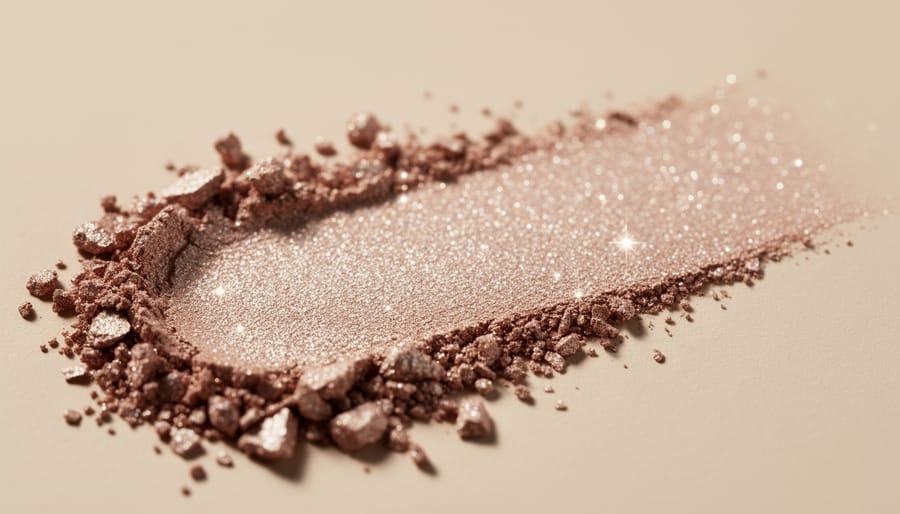
Mica’s shimmer comes from a fascinating process that combines natural minerals with clever chemistry. When manufacturers coat mica flakes with titanium dioxide, light hits those layers and reflects back at different angles, creating that luminous glow you see in your favorite eyeshadow or highlighter. The mica acts like tiny mirrors, while the titanium dioxide coating amplifies and transforms the light.
The magic happens during the coating process. A single layer of titanium dioxide produces a gentle, silvery pearl effect. Add more layers, and the interference between light waves changes, shifting the color from soft champagne to rose gold, bronze, or even blue and green tones. It’s similar to how oil on water creates rainbow patterns, except cosmetic chemists control this effect precisely.
This technique creates what the industry calls pearlescent pigments. These are partly translucent powders made by layering mineral mica with metal oxides and titanium dioxide sourced from rutile, a titanium-rich mineral. The translucency matters because it allows light to pass through the layers, bounce around, and create that multidimensional shimmer that synthetic glitter can’t replicate.
The coating thickness determines everything. A thin application gives you that barely-there glow perfect for daytime looks, while thicker coatings deliver the dramatic, color-shifting effects you see in bold eyeshadows and festival makeup. This versatility explains why mica shows up in products ranging from subtle nude lipsticks to sparkly bath bombs. The same basic process adapts to create whatever shimmer effect a formula needs.
Where You’ll Find Mica in Your Beauty Routine
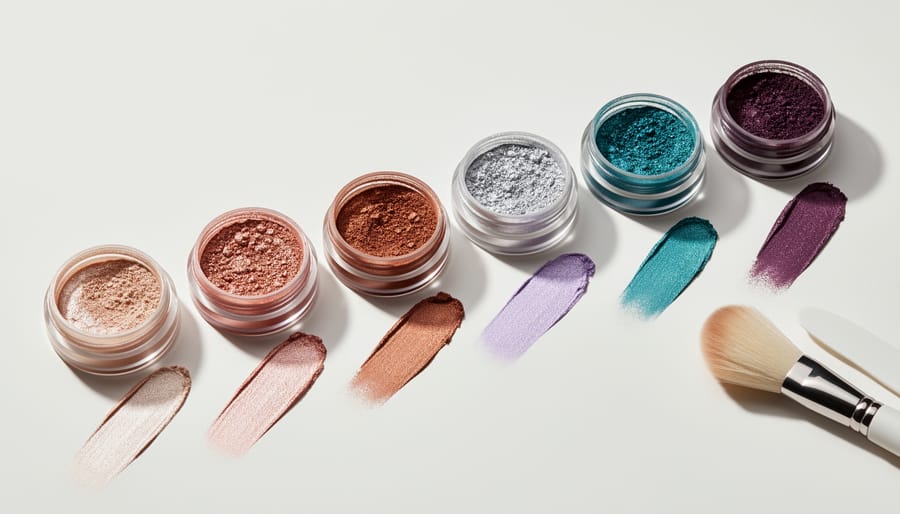
Take a closer look at your makeup bag and you’ll discover mica is practically everywhere. That rose gold eyeshadow you reach for constantly? Mica creates the multidimensional shimmer that catches the light with every blink. The same mineral shows up in your favorite lipstick, adding that subtle luminosity that makes lips look fuller and more dimensional rather than flat. Even your nail polish gets its iridescent shine from mica particles suspended in the formula.
Beyond color cosmetics, mica powder appears in bath bombs, where it creates swirls of shimmer in your bathwater, and in handmade soaps that glisten on your bathroom counter. Some formulas incorporate mica into shimmer mascara to give lashes a subtle sparkle for evening looks, while illuminating primers use finely milled mica to create that coveted lit-from-within glow.
What makes mica so versatile across these different products is its adaptability. In eyeshadow, larger mica particles deliver intense sparkle and dimension. Lipsticks use more finely milled versions for a softer sheen that doesn’t feel gritty. Nail polish formulations suspend mica in ways that create everything from subtle pearl finishes to holographic effects that shift colors in different lighting.
Check the ingredient lists on your current products and you’ll likely spot mica listed near the top, sometimes alongside terms like “synthetic fluorphlogopite” (a lab-created mica alternative) or “CI 77019” (mica’s INCI designation). This mineral’s presence across virtually every shimmer product you own demonstrates why the cosmetic industry relies so heavily on it for pearlescent effects.
The Growing Mica Market: Beauty Industry Insights
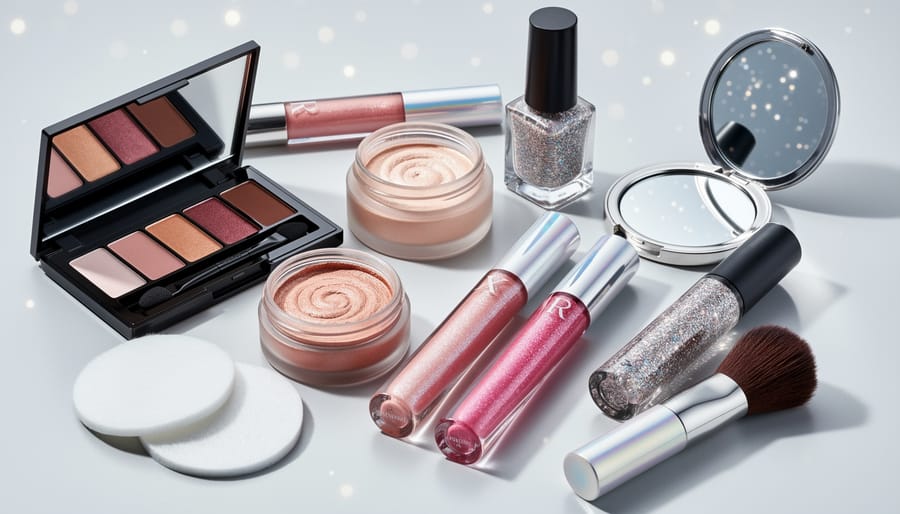
The shimmer that defines so many beloved beauty products rests on a remarkably robust market. The cosmetic grade mica powder market was valued at $1.2 billion in 2025 and is projected to reach $2.1 billion by 2034. That represents growth of 75% over less than a decade, signaling that demand for mica-based shimmer isn’t going anywhere.
| Metric | Value | What It Means for You |
|---|---|---|
| 2025 Market Value | $1.2 billion | Mica is already a major cosmetics ingredient |
| 2034 Projection | $2.1 billion | Expect wider product availability and innovation |
| Growth Rate | 75% | Brands are investing heavily in shimmer formulations |
This expansion reflects several converging factors. Consumers increasingly want multidimensional finishes in everything from eyeshadow to highlighter to lip gloss, pushing brands to develop more sophisticated mica formulations. The versatility of mica powder, which works seamlessly in eyeshadow, lipstick, bath bombs, soap and nail polish, gives it staying power across categories rather than limiting it to a single product type.
Behind the scenes, the industry’s reliance on titanium dioxide and mica-based pearlescent pigments and colorants drives sustained investment in supply chains and formulation technology. When you coat mineral mica with metal oxides and titanium dioxide from rutile, you create those partly translucent pearlescent pigments that give makeup its signature glow. This layering process has become the backbone of modern shimmer cosmetics, and it’s not easily replaced.
For shoppers, this market growth translates to better choices. Brands are refining mica quality, experimenting with new color variations, and responding to demand from consumers who care about ingredient sourcing. Whether you gravitate toward a natural brand or prefer mainstream formulations, the expanding mica market means you’ll find shimmer products tailored to your preferences with increasing transparency about what’s inside.
What to Look for When Shopping Shimmer Cosmetics
When you’re ready to add some shimmer to your beauty routine, knowing what to look for on those ingredient labels makes all the difference. Mica typically appears on the ingredients list as, well, “mica,” though you might also see it listed as CI 77019 (its color index number). It’s usually positioned near the middle of the ingredient list, often alongside titanium dioxide, which is what gives mica its characteristic glow.
Quality matters, and there are a few indicators worth noting. Products that list mica early in their ingredients generally contain more of the mineral, which often translates to more noticeable shimmer. However, placement alone doesn’t tell the whole story. Look for formulas that also list titanium dioxide or other metal oxides nearby, as these coatings determine the intensity and color of the shimmer you’ll actually see on your skin.
You’ll encounter synthetic alternatives marketed as “synthetic fluorphlogopite” or simply “synthetic mica.” These lab-created versions can perform similarly to natural mica but often come with sustainability benefits and more consistent particle sizes. Some brands also use calcium aluminum borosilicate for shimmer effects, particularly when they want a more glass-like finish.
The questions worth asking go beyond just the ingredient itself. Consider whether the brand discloses sourcing information for their mica. Transparency about supply chains has become increasingly important in the beauty industry, much like the transparency we see with other trending ingredients such as CBD in skincare.
Don’t be shy about reaching out to brands directly if sourcing details aren’t on their website. Companies serious about ethical practices are usually happy to share information about their mica suppliers and quality standards. The shimmer you love should make you feel good in every sense.
Expert Perspectives on Mica in Modern Cosmetics
Cosmetic chemist Dr. Sarah Chen has spent fifteen years formulating shimmer products, and she’s definitive about mica’s staying power. “Nothing replicates the natural light-scattering properties of mica quite like mica itself,” she explains. “Synthetic alternatives can create shine, but they lack that dimensional, skin-like luminosity that comes from layered mineral particles.”
The technology surrounding mica has evolved dramatically, even as the base mineral remains constant. Modern coating techniques allow formulators to control particle size with micrometer precision, creating effects ranging from subtle glow to bold metallic finishes. “We’re seeing innovations in how we treat mica surfaces,” says Chen. “New encapsulation methods protect the coatings better, meaning your eyeshadow stays vibrant longer and blends more smoothly.”
Industry consultant Marcus Rivera points to another shift: transparency in sourcing. “The private label beauty sector has pushed major suppliers to verify their mica origins,” he notes. “Five years ago, brands rarely asked. Now it’s standard due diligence, which has driven improvements in mining practices.”
Looking ahead, the frontier isn’t replacing mica but enhancing it. Researchers are developing hybrid pigments that combine mica with biotechnology-derived coatings, creating new color effects impossible with traditional oxide layering alone. Some labs are experimenting with lab-grown mica crystals, though commercial viability remains years away.
What hasn’t changed? The fundamental reason mica works. Its natural plate-like structure creates countless reflective surfaces that catch and bounce light in multiple directions simultaneously. “That’s physics,” Chen says. “Until we can engineer a better crystal structure, mica’s staying exactly where it is: at the heart of every shimmer formula worth wearing.”
Your Mica Questions Answered
Is mica safe to use in cosmetics?
Yes, mica is considered safe for cosmetic use when properly processed and formulated. Regulatory bodies worldwide, including the FDA and EU cosmetic authorities, approve mica as a cosmetic ingredient. The mineral itself is inert and doesn’t typically react with skin, though it’s important to choose products from reputable brands that follow quality standards and test their formulations.
Can mica cause skin sensitivity or irritation?
Pure mica rarely causes sensitivity issues because it’s a naturally inert mineral. However, reactions can occasionally occur due to impurities in lower-quality mica or from other ingredients in the formula, like fragrances or preservatives. If you have sensitive skin, patch-test new shimmer products on your inner wrist before applying to your face.
How can I tell if a product contains mica?
Check the ingredient label, mica will be listed by name, often as “mica” or “CI 77019” (its cosmetic ingredient code). You’ll frequently see it paired with titanium dioxide in the ingredients list, since the shimmer effect is created when mica is coated with an oxide, most commonly titanium dioxide. Products with visible shimmer or pearl effects almost certainly contain mica-based pigments.
What’s the difference between mica and glitter?
Mica creates a subtle, light-reflecting sheen through layered mineral particles, while glitter is typically made from larger pieces of plastic or metallic film that produce distinct sparkles. Mica gives that soft-focus glow you see in highlighters and satin lipsticks, whereas glitter delivers chunky, dramatic sparkle. Mica also blends smoothly into formulas and feels finer on skin compared to grittier glitter particles.
Are there mica-free shimmer alternatives?
Yes, synthetic alternatives exist, including lab-created fluorphlogopite (synthetic mica), calcium aluminum borosilicate, and bismuth oxychloride. These ingredients can create shimmer effects similar to natural mica and appeal to consumers seeking fully synthetic or non-mined options. However, natural mica remains the industry standard because of its superior light-reflecting properties and wide range of effects achieved through different coating thicknesses.
Does the quality of mica vary between products?
Absolutely. Cosmetic-grade mica undergoes purification and processing to ensure particle size consistency and remove contaminants, but quality still varies by supplier and brand. Higher-quality mica produces smoother, more even shimmer with better color payoff and blendability. You’ll notice the difference in how easily an eyeshadow applies and how refined the finish looks on your skin.
Understanding that mica creates the shimmer you see in your favorite beauty products gives you a deeper appreciation for the science behind your makeup bag. This naturally occurring mineral, layered with titanium dioxide and other oxides, is responsible for the gorgeous glow in everything from your eyeshadow to your bath bombs. It’s not magic; it’s chemistry that works beautifully on your skin.
The next time you swipe on a shimmery lipstick or reach for that luminous eyeshadow, you’ll know exactly what’s creating that light-catching effect. With the cosmetic grade mica market expected to grow from $1.2 billion in 2025 to $2.1 billion by 2034, it’s clear that mica will continue lighting up the beauty world for years to come.
We’d love to hear from you. What’s your go-to shimmer product? Drop a comment below and share your mica-powered favorites with the My Oh My community. Your recommendations might just become someone else’s new holy grail.