
Dong quai (Angelica sinensis) is a flowering plant native to China and East Asia, used for centuries in traditional Chinese medicine to support menstrual health, hormonal balance, and reproductive wellness in women. Often called “female ginseng,” this herb has earned its reputation as a cornerstone remedy for everything from painful periods to menopausal symptoms, bridging ancient healing practices with growing modern scientific interest.
If you’re exploring natural approaches to women’s health in 2026, you’ve likely encountered dong quai in supplements, teas, or wellness formulas. The question is whether this traditional remedy holds up under contemporary scrutiny, and how to use it safely alongside what science now understands about hormones, inflammation, and reproductive function.
This article brings together both perspectives. You’ll discover what dong quai actually is and how practitioners believe it works in the body, the different forms available today, and the specific women’s health concerns it’s traditionally used to address. We’ll examine where traditional knowledge aligns with modern research and where gaps still exist, because informed decisions require both respect for ancestral wisdom and honest assessment of current evidence.
Whether you’re managing menstrual irregularities, navigating perimenopause, or simply curious about herbal alternatives, understanding dong quai means looking at its full picture: its historical role in women’s wellness, the physiological mechanisms researchers are investigating, practical guidance on dosing and forms, and crucial safety considerations for your unique health profile.
What Dong Quai Is and Why It Matters for Women
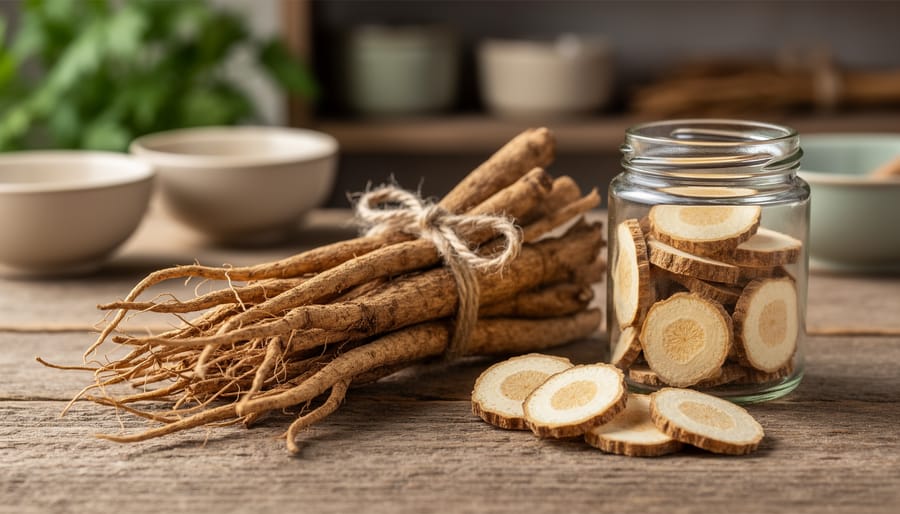
Dong quai, known scientifically as Angelica sinensis, is a flowering plant native to the mountainous regions of China, Korea, and Japan. For over 2,000 years, its root has been a cornerstone of Traditional Chinese Medicine, where it’s often called “dang gui” and celebrated as the “female ginseng” because of its particular affinity for women’s health concerns. The plant belongs to the same family as parsley and celery, and its thick, branching root is the part harvested for medicinal use.
In TCM practice, dong quai is rarely used alone. Instead, it’s typically combined with other herbs in carefully balanced formulas designed to “nourish the blood” and “regulate qi”, concepts that, in modern terms, relate to supporting healthy circulation, hormonal balance, and overall vitality. Practitioners traditionally prescribed it for menstrual irregularities, cramping, menopausal symptoms, and general weakness following childbirth or illness.
- Dong Quai (Angelica sinensis)
- A medicinal root from East Asian mountain regions, used for centuries in herbal formulas to support women’s reproductive and circulatory health.
- Phytoestrogens
- Plant compounds that can mimic or modulate estrogen activity in the body, potentially helping balance hormonal fluctuations during different life stages.
- Adaptogen
- An herb thought to help the body adapt to stress and restore balance, though dong quai’s classification as a true adaptogen remains debated among herbalists.
- “Nourishing the Blood”
- A Traditional Chinese Medicine concept referring to herbs that support circulation, energy levels, and healthy menstruation, rather than literally increasing blood volume.
What makes dong quai particularly significant in 2026 is the growing bridge between traditional use and modern research. Women today are increasingly seeking natural approaches to manage hormonal health, and dong quai offers a time-tested option with emerging scientific backing. Its continued relevance lies in this dual identity: an ancient remedy with enough contemporary interest to warrant ongoing clinical investigation, giving women both ancestral wisdom and evolving evidence to inform their choices.
How Dong Quai Works in the Body
Understanding how dong quai affects the body requires looking at its active compounds and their interactions with women’s physiology. Traditional Chinese Medicine has long viewed dong quai as a blood-nourishing herb that promotes circulation and harmonizes female hormones. Modern research has begun to identify the specific mechanisms behind these traditional uses.
The root contains several bioactive compounds, most notably ferulic acid, ligustilide, and a class of substances called coumarins. These work together rather than in isolation. Ferulic acid acts as a powerful antioxidant and may help regulate smooth muscle contractions in the uterus, potentially explaining why women have used dong quai for menstrual cramping. Ligustilide affects the central nervous system and blood vessels, contributing to both its calming properties and its influence on circulation.
One frequently discussed aspect is dong quai’s phytoestrogen content. Phytoestrogens are plant compounds with a structure similar enough to human estrogen that they can bind to estrogen receptors, though more weakly than the body’s own hormones. This allows them to produce mild estrogenic effects when estrogen levels are low or act as gentle blockers when levels are high. The result is a modulating influence rather than a dramatic hormonal shift, which aligns with the traditional view of dong quai as a regulating rather than stimulating herb.
The herb’s impact on blood circulation has both traditional and scientific backing. Danggui promotes blood circulation through its ability to inhibit platelet aggregation and relax blood vessels, making blood flow more smoothly. This mechanism matters for women’s health because adequate pelvic blood flow supports healthy menstrual function and can reduce the severity of cramping. The same compounds that improve circulation also demonstrate anti-inflammatory effects, helping to quiet the prostaglandins that trigger uterine contractions and menstrual pain.
These mechanisms work synergistically, which is why dong quai has earned its reputation as a comprehensive women’s herb rather than a single-purpose remedy.
Forms and Preparations of Dong Quai
Traditional Preparations
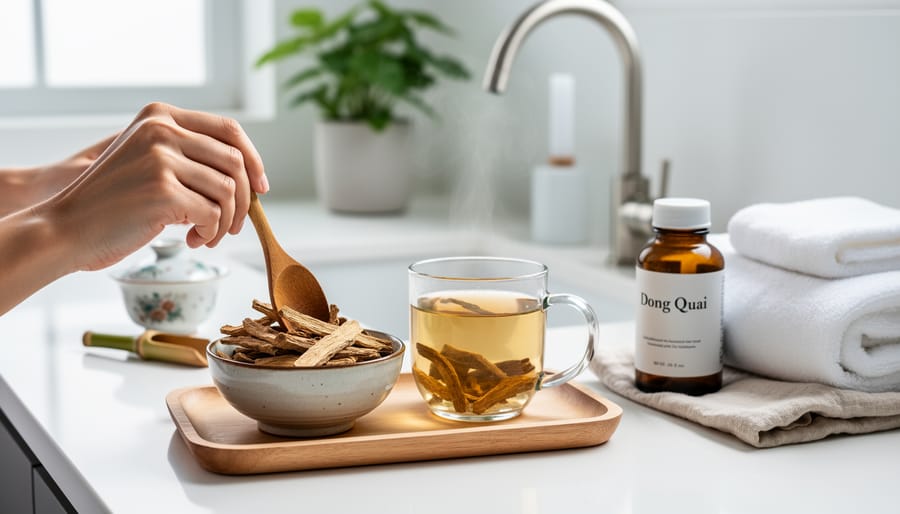
In Traditional Chinese Medicine, dong quai root was rarely used alone. Practitioners combined it with other herbs like white peony, rehmannia, and ligusticum in formulas tailored to each woman’s specific pattern of imbalance. The most common preparation method was decoction, simmering dried root slices in water for 20 to 40 minutes to extract the active compounds into a strong tea. Women typically drank this once or twice daily during specific phases of their menstrual cycle or as part of a longer treatment course.
TCM formulas containing dong quai were categorized by their warming or cooling properties and their target organ systems. For menstrual irregularities, practitioners often prescribed it in “blood-nourishing” blends taken after menstruation. For postpartum recovery, warming formulas helped restore energy and circulation. Dosing was highly individualized, ranging from 3 to 15 grams of dried root per day depending on constitution, symptoms, and accompanying herbs.
This personalized approach remains central to TCM practice today, where herbalists still prepare custom decoctions rather than relying on standardized single-herb products.
Modern Supplement Forms
Today’s dong quai supplements look nothing like the bitter teas your grandmother might have brewed. Manufacturers now offer standardized extracts in convenient capsules or tablets, typically containing 500-600 mg per dose. These products promise consistent levels of active compounds, something traditional preparations couldn’t guarantee.
You’ll find dong quai sold as a standalone supplement or combined with other herbs like black cohosh, red clover, or vitex in menopause or PMS formulas. Liquid extracts and tinctures provide another option, usually taken as drops mixed in water. Some brands use supercritical CO2 extraction, which preserves more volatile compounds than older methods.
Standardization matters here. Quality supplements specify the percentage of ligustilide, dong quai’s primary active constituent, ensuring you get the same potency bottle to bottle. Most products standardize to 0.8-1% ligustilide content.
The trade-off? Modern forms sacrifice the synergistic effects of whole-herb decoctions, where dong quai works alongside complementary ingredients. They’re practical and shelf-stable, but they represent a different philosophy, prioritizing convenience and measurable consistency over traditional complexity.
How Dong Quai Is Used in Women’s Health
Menstrual Health and PMS
Dong quai has long been valued for its ability to address menstrual discomfort and irregularity. Traditional Chinese Medicine practitioners prescribed it to “nourish the blood” and promote smooth menstrual flow, particularly for women experiencing delayed or scanty periods accompanied by fatigue and pale complexion. The herb’s reputation centers on its capacity to gently regulate cycles rather than force them, working with the body’s natural rhythms.
For cramping and PMS symptoms, dong quai’s antispasmodic properties help relax uterine muscles, potentially reducing the intensity of menstrual pain. Many women report relief from breast tenderness, mood swings, and bloating when using dong quai in the week leading up to menstruation. Traditional formulas often combined it with other herbs like peony and licorice for enhanced effect.
Modern users typically take standardized extracts starting mid-cycle, though some prefer continuous use for overall cycle regulation. Results vary considerably among individuals. While some women notice improvements within two to three cycles, others see minimal change. The herb appears most effective for those with mild to moderate symptoms rather than severe menstrual disorders, which require medical evaluation.
Menopause Support
Dong quai has long been used in Traditional Chinese Medicine to ease the transition through perimenopause and menopause, and many women today turn to it as an alternative or complement to hormone therapy. Its phytoestrogen compounds may help moderate hot flashes and night sweats by gently influencing estrogen receptors, though the effect varies considerably among individuals. Some women report improvements in sleep quality and emotional balance, positioning dong quai alongside other natural stress relievers in their menopause toolkit.
Modern research on dong quai for menopause symptoms shows mixed results. Several studies indicate modest benefits when dong quai is combined with other herbs rather than used alone, while isolated clinical trials have not consistently demonstrated strong relief from vasomotor symptoms. The 2026 consensus among integrative practitioners is that dong quai works best as part of a broader approach that includes diet, exercise, stress management, and individualized herbal formulas rather than as a standalone solution for hot flashes or mood swings.
Blood Health and Circulation
In Traditional Chinese Medicine, dong quai earned its reputation as one of the premier “blood-nourishing” herbs, prescribed for centuries to women experiencing fatigue, pale complexion, and weakness, symptoms TCM practitioners associated with blood deficiency. The herb was believed to both build and move blood, a dual action that distinguished it from other tonics.
Modern research has begun exploring the mechanisms behind these traditional uses. Dong quai contains compounds called ferulic acid and ligustilide that may support healthy blood vessel function and promote circulation. Some studies suggest these constituents help relax blood vessels, potentially improving blood flow throughout the body. The herb’s iron content, while modest, combined with compounds that may enhance iron absorption, has led researchers to investigate its role in supporting women with iron-deficiency anemia.
Several small studies have shown dong quai may help increase red blood cell counts when used alongside conventional treatments, though results remain mixed and more rigorous research is needed. Women dealing with heavy menstrual bleeding or those recovering from blood loss sometimes turn to dong quai as part of a broader nutritional approach to rebuilding their stores, though it should complement, not replace, medical treatment for diagnosed anemia.
What the Research Says: Traditional Wisdom Meets Modern Science
The scientific scrutiny of dong quai reveals a complex picture that both validates and challenges its traditional reputation. While this herb has centuries of anecdotal support, modern clinical trials have produced mixed results that underscore the importance of setting realistic expectations.
Several studies have demonstrated dong quai’s potential benefits for specific women’s health concerns. Research published in evidence-based complementary medicine journals shows that dong quai extract can reduce menstrual pain severity and duration when used consistently over multiple cycles. Its anti-inflammatory compounds, including ferulic acid and ligustilide, have been measured in laboratory settings and appear to inhibit inflammatory pathways that contribute to cramping. Studies on blood circulation support its traditional role as a blood tonic, with some research indicating improved red blood cell production in women with mild anemia.
However, results for menopausal symptoms present a more nuanced picture. While some women report relief from hot flashes and mood fluctuations, controlled clinical trials comparing dong quai alone against placebo have often failed to show statistically significant differences. This discrepancy may reflect how TCM traditionally uses dong quai in combination formulas rather than as a standalone remedy, a context that single-herb studies cannot capture.
The challenge lies in study design limitations. Many trials involve small sample sizes, short durations, or unstandardized preparations that make direct comparisons difficult. What works in traditional practice, where herbs are customized to individual constitutions and combined synergistically, does not always translate cleanly to the randomized controlled trial model.
This gap between traditional wisdom and clinical validation does not invalidate dong quai’s potential. It simply means we are still learning how best to measure and apply an ancient remedy within modern scientific frameworks.
Safety, Dosage, and What to Watch For
While dong quai has been used safely for centuries in traditional formulas, modern use requires careful attention to dosage, timing, and individual health circumstances.
Typical Dosing and Forms
Standard doses range from 500 to 1,500 mg of dried root extract daily, though traditional practitioners often use lower amounts within herbal blends. Capsules and tablets usually recommend 600 to 1,000 mg split into two or three doses. Tinctures vary by concentration, follow manufacturer guidelines and start at the lower end. Because dong quai works gently over time, expect to use it consistently for at least four to eight weeks before assessing results, much like you’d give a new nighttime routine or diet and exercise plan time to show benefits.
Potential Side Effects and Interactions
Most women tolerate dong quai well, but some report mild digestive upset, headaches, or increased sun sensitivity. More concerning are drug interactions. Dong quai can amplify blood-thinning medications like warfarin, aspirin, and clopidogrel, raising bleeding risk. It may also interact with hormone therapies and certain antidepressants. Always disclose supplement use to your healthcare provider, especially before surgery.
When to Avoid Dong Quai
Do not use dong quai during pregnancy or breastfeeding, it can stimulate the uterus and isn’t established as safe for nursing. Women with bleeding disorders, upcoming surgeries, or hormone-sensitive cancers should avoid it unless specifically guided by a qualified practitioner. If you’re on prescription medications or have chronic health conditions, get professional clearance first.
Quality matters too. Choose products from reputable brands that provide third-party testing for purity and potency, ensuring you’re getting genuine dong quai without contaminants.
Choosing and Using Dong Quai in 2026
Choosing quality dong quai starts with reading labels carefully. Look for products that specify the plant part used (the root is most valued), the concentration or standardization of active compounds, and manufacturing practices that protect potency. Third-party testing seals from organizations like USP or NSF offer reassurance that what’s on the label matches what’s in the bottle.
When evaluating your options, prioritize products that meet these quality standards:
- Third-party testing verification from independent labs
- Organic certification to minimize pesticide exposure
- Standardized extracts with clear percentages of active constituents
- Reputable brands with transparent manufacturing practices
- Clear sourcing information and country of origin
Before starting dong quai, consult a healthcare provider who understands both herbal medicine and your personal health history. This conversation becomes essential if you’re taking prescription medications, have hormone-sensitive conditions, or are pregnant or nursing. Your provider can help determine appropriate dosing and monitor for interactions.
Integrate dong quai mindfully rather than expecting instant results. Many women begin with lower doses to assess tolerance, taking it with food to minimize digestive upset. Keep a simple log noting when you start, the dose, and any changes you observe in symptoms or wellbeing. This tracking helps you and your healthcare provider evaluate whether dong quai serves your needs over time. Quality matters more than quantity, so invest in products that meet stringent standards rather than choosing based solely on price.
Frequently Asked Questions
How long does it take to see results from dong quai?
Most women notice changes within four to six weeks of consistent use, though some may experience benefits sooner for acute symptoms like menstrual cramps. Full effects for hormonal regulation and cycle normalization typically require two to three months of regular supplementation.
Can I take dong quai with birth control pills?
Because dong quai can influence estrogen activity, it may theoretically interfere with hormonal contraceptives. Always consult your healthcare provider before combining dong quai with birth control, as the interaction could affect contraceptive efficacy.
Is dong quai safe for long-term use?
Traditional use suggests dong quai is generally safe for extended periods, but modern guidance recommends taking periodic breaks, such as one week off every three months. Long-term safety studies in Western populations remain limited, so regular check-ins with a healthcare provider are wise.
What’s the difference between dong quai and black cohosh?
While both herbs are used for women’s health, dong quai primarily works as a blood tonic and circulatory support in TCM, whereas black cohosh is better studied for hot flashes and menopause symptoms. They have different active compounds and can sometimes be used together under professional guidance.
Do I need a prescription for dong quai?
No, dong quai is available as an herbal supplement without a prescription in most countries. However, working with a knowledgeable practitioner, especially one trained in TCM or integrative medicine, helps ensure you choose the right form and dosage for your specific needs.
Beyond these common questions, women often wonder about brand differences. Quality varies considerably between manufacturers, influenced by factors like the age of the root, growing conditions, and extraction methods. Reputable brands will provide third-party testing certificates and specify the dong quai species on the label. Price alone is not a reliable indicator of quality, but extremely cheap products may use inferior root material or lack proper standardization. When comparing options, look for transparency about sourcing and manufacturing practices rather than focusing solely on percentage of active compounds, since dong quai’s benefits likely come from a complex interplay of constituents rather than a single isolated compound.
Dong quai stands at a fascinating crossroads where centuries of traditional wisdom meet contemporary wellness practices. For women navigating health concerns from menstrual irregularities to menopausal transitions, this herb offers a time-tested option rooted in Traditional Chinese Medicine yet increasingly explored through modern research.
What makes dong quai particularly valuable in 2026 isn’t just its long history, it’s the growing recognition that holistic approaches often work best when they respect both ancestral knowledge and scientific inquiry. While research continues to catch up with traditional claims, many women find meaningful support in carefully incorporating dong quai into their wellness routines.
Your path forward should be informed and collaborative. Quality matters when selecting products, and professional guidance matters even more. Whether you’re drawn to dong quai for menstrual support, circulation benefits, or menopausal relief, approach it as part of a broader conversation with your healthcare provider, one that honors your body’s unique needs and respects both traditional insight and evidence-based practice.
Blending old and new wisdom isn’t about choosing sides. It’s about making empowered decisions that support your health journey with care, knowledge, and intention.